
Warehouse work powers Houston’s shipping, logistics, and manufacturing economy, from the Port of Houston and the Ship Channel to the major distribution corridors along I-10, I-45, Highway 290, Beltway 8, and the Grand Parkway. In massive fulfillment and distribution centers across Houston, Katy, Pasadena, Baytown, La Porte, Deer Park, Pearland, Sugar Land, Cypress, Humble, Spring, and The Woodlands, workers lift, load, pick, pack, drive, and move freight at a relentless pace.
In facilities run by major companies like Amazon, Walmart, Target, UPS, FedEx, H-E-B, Kroger, Sysco, and manufacturers like Igloo, the pressure to hit quotas and clear backlogs can turn a demanding job into a dangerous one. Tight aisles, high racking, blind corners, fast-moving equipment, and nonstop conveyor lines create constant opportunities for a single mistake or mechanical failure to cause a serious injury.
Risks often spike during peak seasons and surge events, including holiday inventory ramps and major sales cycles. Overtime increases, staffing gets stretched, and production targets can reward speed over safety. Forklifts move faster, pallets get stacked higher, and conveyor systems run longer. In those conditions, it does not take much for a routine shift to become an emergency.
When something goes wrong, warehouse injuries are rarely minor. Head trauma, back and spine injuries, crush injuries, amputations, chemical exposure, and falls from height can leave a worker unable to return to the job, facing medical bills, missed paychecks, and a long recovery that impacts the whole family.
You should not have to figure this out alone. A Houston warehouse injury attorney can investigate what happened, identify who is responsible (including third parties), and pursue the compensation you need to rebuild your health, your income, and your future.
Our legal team operates on a contingency fee basis, meaning if we don’t win your case, you don’t pay us. Our fee would be a percentage of the compensation obtained for you and your family. You don’t have to pay us out of your pocket, and there are no upfront payments, either!
Our team of Houston Warehouse accident lawyers is ready to assist you if you or a family member has suffered injuries in a warehouse accident. Don’t leave your recovery and livelihood to chance; you deserve compensation. Call us today and book your free and confidential consultation with an expert from our team. Get your compensation with The Law Offices of Hilda Sibrian™, attorneys who know how to deal with insurance companies.

Warehouses are built around speed, volume, and tight deadlines. That pressure creates an environment where a forklift collision, falling load, conveyor incident, or equipment failure can change a life in seconds. Many serious warehouse accidents involve preventable safety issues such as:
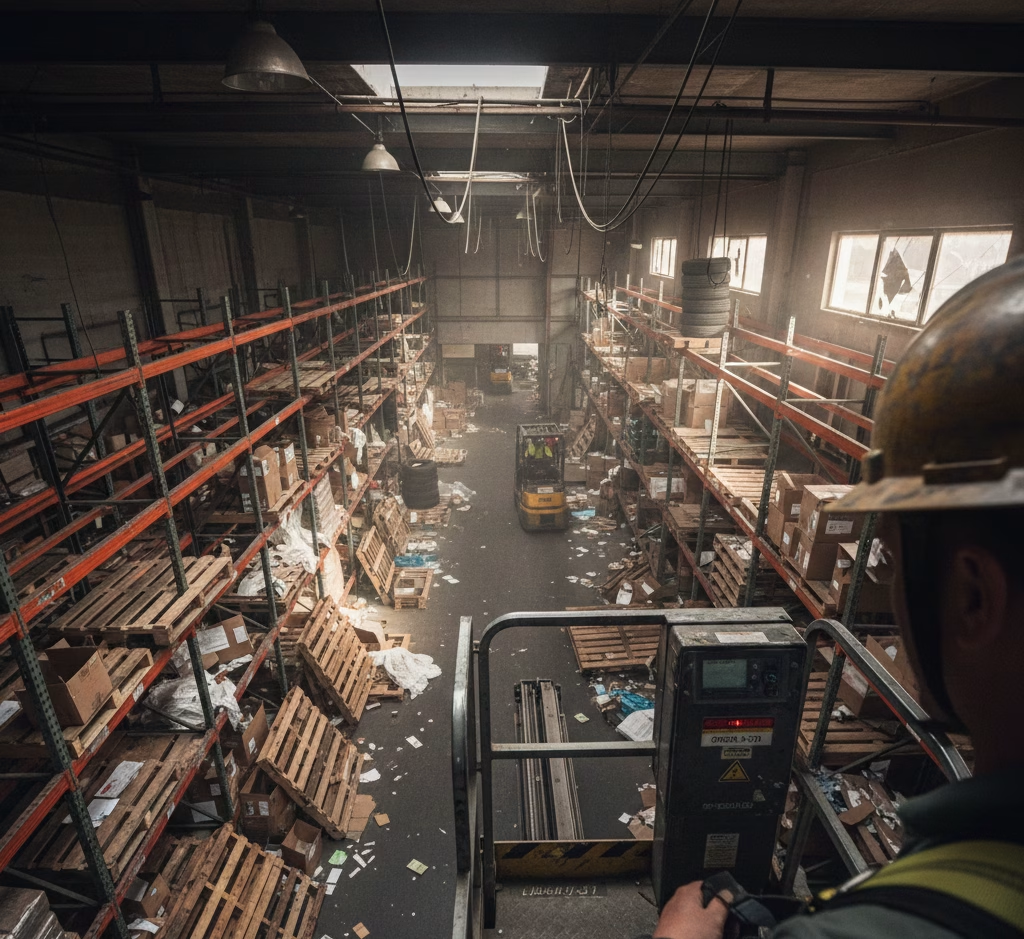
Warehouses vary in size and layout, but the most severe incidents tend to repeat across industries. In Greater Houston facilities, serious accidents often stem from production pressure, heavy machinery, and missing or ignored safety procedures. Common warehouse incidents include:
Warehouse accidents are rarely “minor.” Heavy loads, moving equipment, and elevated work areas can cause life-altering injuries that change your ability to work and live normally, including:
Your options depend on whether your employer carries workers comp insurance and whether other companies contributed to the incident. Both situations create very different legal paths, and each one can still allow you to pursue compensation beyond basic medical coverage.
Workers comp covers medical treatment and a portion of lost wages, but it does not pay for the full range of losses that come with a life altering warehouse incident. This is where third party claims become crucial. Many warehouse accidents involve outside contractors, equipment manufacturers, truck drivers, maintenance vendors, or staffing agencies. If any third party’s negligence contributed to your accident, you may have the right to pursue a separate claim against them. That claim can recover the damages workers comp does not cover, including full wage loss, pain and suffering, long term disability, and other financial harms.
Employers who opt out of workers comp lose their legal protections and can be sued for the full extent of the harm their negligence caused. These claims often involve failures to maintain equipment, unsafe production quotas, inadequate training, or ignoring known hazards. A successful claim can provide far more support than workers comp alone, including full wage replacement, future medical care, diminished earning capacity, and all pain and suffering damages.
Regardless of the situation, an injured worker should never feel trapped or limited by the workers comp system. Understanding whether you have a third party claim, a claim against a non subscriber employer, or both can change the entire outcome of your recovery. A warehouse injury attorney can help you figure out who else may be liable by sorting through the contracts, vendors, insurance policies, and safety failures to identify every possible source of recovery compensation and make sure no responsible party escapes accountability.
If you have never been seriously hurt at work, it is easy to assume the company or an insurance adjuster will “handle it.” In reality, warehouse injury cases often involve rushed incident reports, missing video, unclear fault, and pressure to return to work before you are medically ready. A serious injury in a Houston-area warehouse can create long-term medical needs and lost income, and a quick settlement offer rarely accounts for the full cost of recovery.
Warehouses and insurers are built to control risk and reduce payouts. Having a Houston warehouse injury attorney on your side gives you someone to protect your claim and build the strongest case possible, including:
A warehouse injury can affect your health, your paycheck, and your family’s stability. Getting legal guidance early helps protect your rights and keeps critical evidence from disappearing.
Warehouse accidents rarely happen in a vacuum. Modern facilities rely on a network of outside companies, contractors, and vendors, and any one of them can create dangerous conditions. When a third party’s negligence contributes to your injury, they can be held fully responsible for the harm you suffered. Depending on what went wrong, potential at fault parties may include:
These third party claims often make the difference between limited workers compensation benefits and full financial recovery. Understanding every company involved in the warehouse operation is a key part of building a strong case.
When workers are hurt at a warehouse, they naturally have a lot of questions. Hilda Sibrian answers some of the most common questions from clients and consultations below.
It depends on whether your employer carries workers’ compensation insurance. If your employer is a workers’ comp subscriber, you typically cannot sue the employer for negligence, but you may still have a third-party claim (for example, against an equipment manufacturer or outside contractor). If your employer is a non-subscriber (no workers’ comp), you may be able to sue the employer directly for negligence.
Non-subscriber cases can be very different from workers’ comp claims. You may be able to pursue damages that workers’ comp doesn’t pay (like pain and suffering), and the employer’s available defenses can be limited compared to a standard negligence case. The facts and documentation from the first few days often matter.
Often, potentially both. Temp arrangements commonly involve shared control over training, safety policies, supervision, and equipment. Liability may depend on who controlled the worksite conditions, who provided safety training/PPE, and who created (or failed to correct) the hazard.
Possibly. If a defect or unsafe design contributed to the injury, you may have a claim against the manufacturer, maintenance vendor, or another responsible party in the chain of distribution. Evidence preservation is critical—photos, serial numbers, inspection logs, and maintenance records can be key.
Forklift crashes may involve driver negligence, inadequate training, blind corners, missing warning systems, unsafe speed policies, poor traffic design, or equipment malfunction. Depending on the employer’s workers’ comp status, you may have a claim through workers’ comp, a lawsuit against a non-subscriber employer, and/or a third-party claim.
Maybe. Slip-and-fall cases often turn on whether a hazard existed (spill, debris, uneven surface), how long it was present, whether there was adequate warning, and whether safety procedures were followed. Photos, witness names, and incident reports help establish what happened and why. Slip and fall cases are especially common near loading docks that can be 3-5 feet in height.
Being blamed does not automatically end a claim. In fact, blaming the injured party is often the first step liable parties take.
Liability can be shared, and employers/insurers often raise fault early. The stronger your documentation (incident report, witnesses, photos, medical records), the harder it is for others to rewrite what happened.
Deadlines depend on the type of claim (workers’ comp reporting deadlines vs. a lawsuit). Because time limits can be short and fact-specific, it’s best to get guidance quickly after the incident – especially if a third party may be involved.
It depends on the claim path. Workers’ comp typically covers medical treatment and partial wage benefits. Lawsuits (non-subscriber employer or third party) may allow recovery for a wider range of damages, including full lost income, impairment, future medical needs, and pain and suffering.
After a warehouse accident, the first few days matter more than most people realize. Evidence can disappear fast. Surveillance footage may be overwritten, incident reports can be changed or “cleaned up,” and damaged equipment can be repaired or moved before anyone documents what really happened. Even small details, like who was operating a forklift, where a pallet was stacked, or what warning signs were missing, can make a huge difference in your claim.
Memories fade, too. Coworkers and supervisors may remember the incident clearly at first, but those details get fuzzy quickly, especially in busy Houston-area warehouses with shift changes, turnover, temp staffing, and rotating crews. Waiting can mean losing the best chance to preserve witness statements and confirm what conditions were like at the time of the injury.
If you have been injured in a warehouse, call Houston Personal Injury Attorney Hilda Sibrian today. The Law Offices of Hilda Sibrian have served the Houston community for over 22 years, and are ready to review your free consultation.
Hilda Sibrian serves the Houston metropolitan area, including Sugar Land, Missouri City, La Porte, Beaumont, Pasadena, The Woodlands, The Heights, Bellaire, Kingwood, Baytown and of course Houston proper. Call our office today or fill out our online contact form for a free consultation.

Contact Us