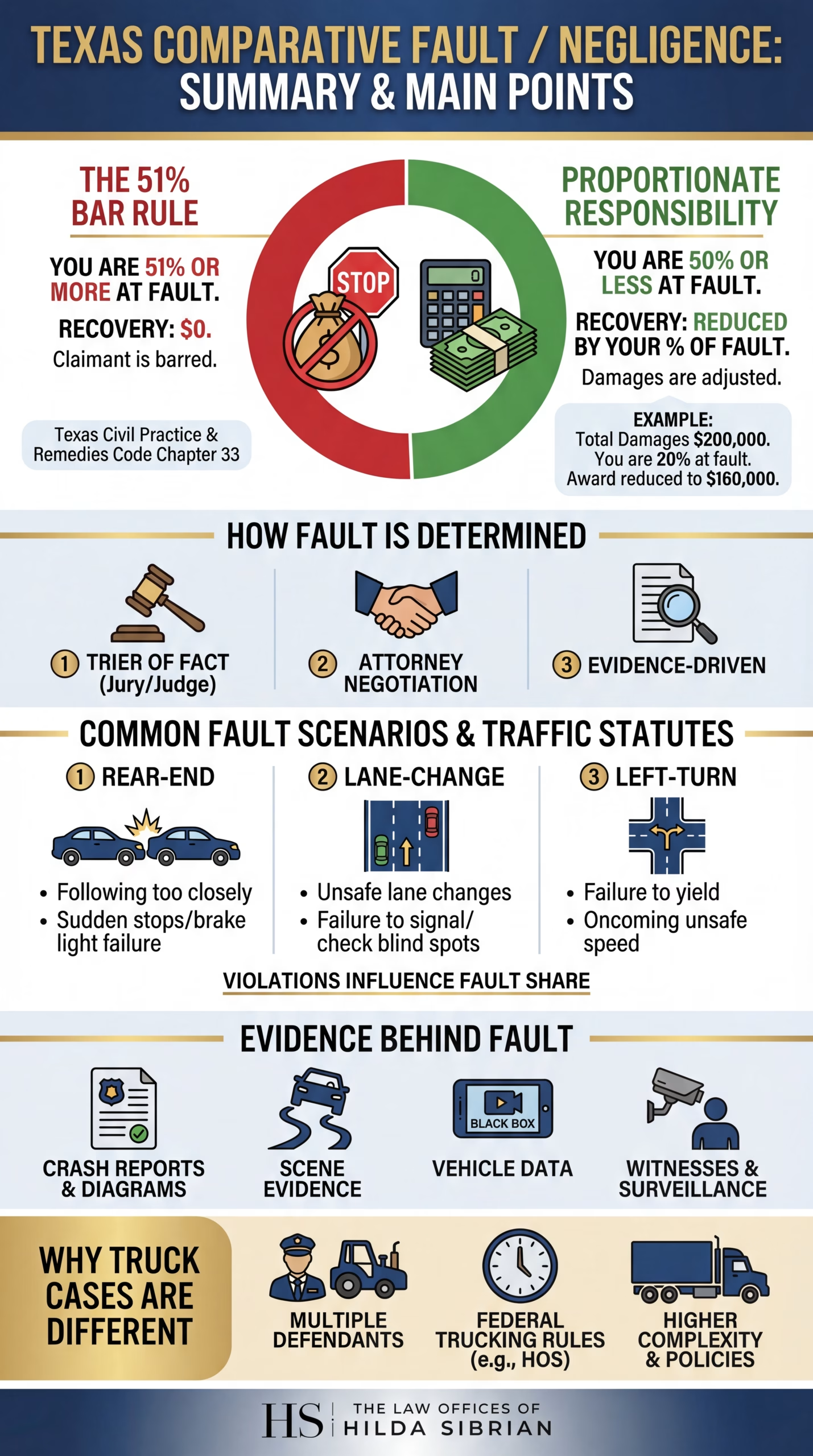
Fault is not always “all or nothing” after a crash. In Texas, multiple people (including the injured person) can share responsibility for the same collision. This matters because your share of fault can reduce-and sometimes eliminate-what you can recover.
Texas uses a modified comparative negligence system (also called “proportionate responsibility”). The practical outcome is simple:
- If you are 51% or more at fault, you recover nothing.
- If you are 50% or less at fault, your recovery is reduced by your percentage of fault.
The legal framework: Texas “proportionate responsibility”
Texas Civil Practice & Remedies Code Chapter 33 governs how responsibility is assigned and how damages are adjusted.
1) The 51% bar rule
Texas law bars recovery when the claimant’s percentage of responsibility is greater than 50%.
2) How the percentage is decided
In a lawsuit, the “trier of fact” (usually a jury) determines the percentage of responsibility-stated in whole numbers-for each person whose conduct caused or contributed to the harm. This is not always the case, however. Often times attorneys on both sides will sit down before trial and adjust their asking prices based on the estimated fault apportionment.
3) How damages are reduced
If you are not barred, the court reduces your damages by your percentage of responsibility.
Example: If a jury finds your total damages are $200,000 and you are 20% responsible, your award is reduced to $160,000. If you are 55% responsible, you recover $0.
What Does “Fault” Mean in Comparative Negligence Cases?
In car, truck, and commercial vehicle collisions, fault is typically built from (1) what each driver did, (2) what traffic laws require, and (3) evidence showing how the crash happened.
Texas traffic statutes frequently used in fault analysis include:
- Following too closely: drivers must maintain an assured clear distance so they can stop safely without colliding or veering into others.
- Unsafe speed (basic speed law): a driver may not drive faster than is reasonable and prudent under existing conditions.
- Lane discipline / unsafe lane changes: drivers must generally stay within a single lane and may not move lanes unless it can be done safely.
- Signaling turns and lane changes: signaling is required, including continuous signaling for at least the last 100 feet before turning.
These rules matter because insurers and juries often use them as benchmarks for “reasonable care.” A violation does not automatically mean that a claim is ruined, but it can strongly influence who is assigned what share of fault.
Examples of Comparative-fault Patterns in Texas Crashes
Comparative negligence often shows up in situations like:
- A rear-end collision where the front driver stopped suddenly without reason, or had non-functioning brake lights, while the rear driver was following too closely.
- A lane-change crash where one driver failed to signal or check blind spots, but the other was speeding or driving too fast for heavy rain conditions.
- A left-turn crash where the turning driver failed to yield, but the oncoming driver was traveling at an unsafe speed, making the collision unavoidable once the turn began.
The point is not that “everyone is always at fault.” It’s that Texas law allows fault to be divided when the evidence supports it-and that division directly changes the value of the claim.
Why Truck and Commercial-Vehicle Cases Are Different
Commercial vehicle cases often involve larger policies, more severe injuries, and more potential defendants. That increases both opportunity and complexity in fault allocation. For example, if the accident was due to a spilled or uneven load, the fault could like in part among the driver, who is responsible for checking the load, or the loader.
Multiple defendants can share responsibility
As we just touched on, in a trucking or commercial-vehicle crash, fault could be assigned among:
- The commercial driver
- The motor carrier (employer) (for poor procedure or improper training)
- A maintenance contractor (for failing to properly maintenance the vehicle)
- A shipper or loader (cargo securement / load balance issues)
- A vehicle manufacturer (in defect scenarios)
- Another driver who triggered the chain of events
Texas’s proportionate responsibility framework is designed to handle exactly this kind of multi-party fault allocation. For more information on multi-driver related crashes, read our article on multi-car pileups.

Federal trucking rules can become fault evidence
An additional point of consideration for trucking cases are federal safety rules. Jurors and adjusters often make their decisions (and offers) based on whether or not these rules were followed. One major area is hours-of-service compliance (fatigue). For example, federal regulations limit how long property-carrying drivers may drive after coming on duty and require off-duty time before driving.
Even when a violation is not the sole cause of the crash, it can support an argument that the driver or carrier contributed to the collision (and therefore should be assigned a higher percentage of responsibility).
The Evidence Behind Fault Determination
Texas comparative negligence is evidence-driven. The biggest levers in fault determinations in car and truck cases are usually:
Crash reports and diagrams
Police crash reports are often a starting point, not the last word. In Houston-area collisions investigated by HPD, crash reports are commonly obtained through the online portal HPD directs the public to use.
At the statewide level, TxDOT provides crash report and record purchasing information through its crash records page (CRIS-related purchasing guidance and record access).
Scene evidence and roadway conditions
Skid marks, debris fields, sight lines, signage, lighting, and weather often explain why a driver’s decision was unsafe under the “reasonable and prudent” speed standard.
Vehicle data and digital evidence
Modern commercial trucks may have electronic logging and other data sources relevant to speed, braking, and driver hours. (These details are case-specific, but the general concept is that objective data often drives fault percentages.)
Witnesses and surveillance
Houston corridors with heavy commercial traffic and dense development sometimes provide nearby cameras (businesses, traffic-adjacent systems, dash cams). Video can collapse competing stories into a clear sequence of events.
Driver behavior before impact
Unsafe lane changes, failure to signal, and following too closely are common comparative-fault battlegrounds because they map directly to Texas Transportation Code duties.
Houston and Harris County considerations: what changes-and what does not
A key point: Houston and Harris County do not create a different comparative negligence rule for car and truck crashes. The 51% bar and damage reduction rules come from state law and apply the same way in Houston as they do elsewhere in Texas.
What does change in Houston is the practical reality of (1) investigation and reporting, (2) where and how cases are filed, and (3) the local roadway environment that often shapes fault arguments.
Hire a Lawyer for Serious Car Crash Injuries in Houston
Ultimately, comparative negligence cases should be treated just like any other case: with a strong focus on investigation, evidence gathering, and support for the victim. The Law Offices of Hilda Sibrian have worked with victims of serious auto accidents for over two decades. Our firm is dedicated to providing hte best legal representation for any cases involving broken bones, wrongful death, internal injuries, spine injuries and other injuries sustained as a result of a commercial vehicle, 18-wheeler or car accident.
The Law Offices of Hilda Sibrian are ready to provide top-rated legal support to any Houston driver with serious injuries. Our firm works hard to determine the details of an accident, even in the absence of a police report. Attorney Hilda Sibrian has served the Houston workforce for over 20 years. Hilda Sibrian serves the Houston metropolitan area, including Sugar Land, Missouri City, La Porte, Beaumont, Pasadena, The Woodlands, The Heights, Bellaire, Kingwood, Baytown and of course Houston proper. Call our office today or fill out our online contact form for a free consultation.