
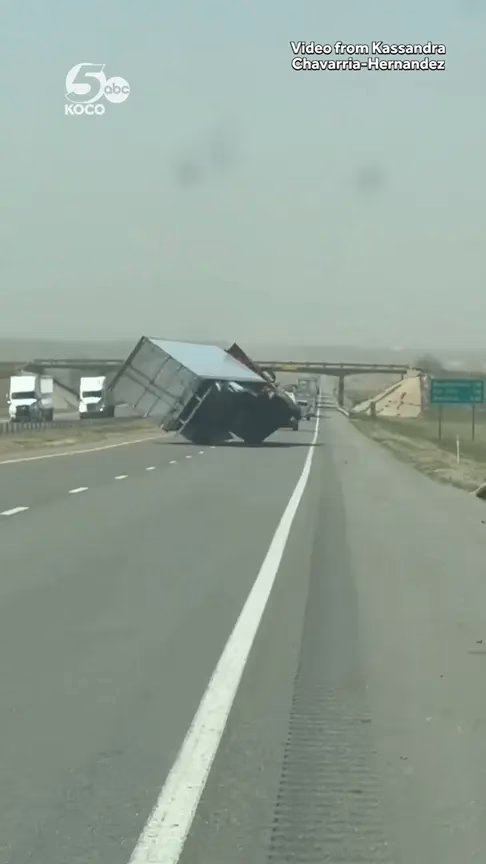
 Wind tip-over crashes are some of the most violent trucking accidents on Texas roads. A fully loaded tractor-trailer already has a high center of gravity, a long trailer profile, and a large side surface that can catch crosswinds. When strong gusts hit at highway speed, especially on bridges or open stretches of interstate, the trailer can lean, slide, jackknife, or rollover completely onto nearby vehicles.
Research and transportation agencies treat these events as a serious roadway hazard, not a freak occurrence. A Wyoming DOT-supported study found 316 wind-related blow-over crashes in that state over a six-year period from 2012 through 2017, averaging 52.7 per year, and described blow-over crashes caused by severe crosswinds as a severe problem on highways exposed to high winds.
Some areas remain more prone to tip-over incidents, like the Panhandle or Great Plains, but tip-overs can happen anywhere there are high enough winds, like El Paso or Houston.
However, one of the difficulties in holding trucking companies liable for tip-over incidents is that they often try to hide behind “bad weather.” Wind may be part of the story, but there are many mitigating practices that truckers often do not do in the name of speed or efficiency.
- How high winds flip an 18-wheeler
- Wind tip-overs are not usually unavoidable “acts of God”
- Where do wind tip-over truck crashes occur?
- Wind tip-over injuries are usually catastrophic
- Who may be liable in a wind tip-over accident?
- Hire a Houston Attorney for a Wind Tip-Over Accident
How high winds flip an 18-wheeler
Winds that blow against the direction of travel are called “crosswinds.” Crosswinds are especially dangerous for large trucks because the trailer acts like a broad sail. A gust striking the side of a trailer creates lateral force and rolling force at the same time. This means that the wind both pushes the trailer across the road and catches the top to push it over. Academic literature on vehicle dynamics consistently identifies crosswinds as one of the wind conditions most associated with instability and rollover.
However, high winds are not the end of the story. Wind tip-over events usually happen only when other factors are present, such as:
- a lightly loaded trailer
- uneven cargo distribution
- a high center of gravity
- excessive speed
- an elevated ramp
- sudden steering correction
- worn tires
- poor maintenance
Sometimes, drivers decide to keep going after high-wind warnings should have prompted a slowdown or shutdown. Whether it’s a directive from higher up the food chain or an impulsive or rash decision, these drivers play with the fate of thousands of other drivers. And when they lose, it is in a catastrophic fashion that seriously hurts or kills other drivers.
Wind tip-overs are not usually unavoidable “acts of God”
When confronted about a tip-over incidents, trucking insurance companies often try to frame a wind rollover as unavoidable. The arguments are often, “The wind came out of nowhere,” “There was nothing we could do to prevent it.”
These arguments are misleading. Weather is only one part of the reason these accidents happen. The real question in wind tip-over accidents is whether the driver and motor carrier responded reasonably to a known risk.
Under 49 C.F.R. § 392.14, a commercial driver must exercise “extreme caution” in hazardous conditions, reduce speed, and discontinue operation if conditions become too dangerous. Under 49 C.F.R. § 392.7 and § 396.13, the driver must also be satisfied that the truck is in safe operating condition before driving. And under 49 C.F.R. § 392.9, the cargo must be properly distributed and adequately secured, with follow-up inspection requirements after the trip begins.
These rules matter because wind tip-over crashes are usually caused by a set of preventable operational failures.
That means a company can still be liable if, for example:
- it pushed a driver to stay on schedule despite weather alerts
- dispatched a truck with an unsafe or improperly loaded trailer
- failed to maintain tires or suspension components
- or allowed a driver to operate too fast for conditions.
In many cases, the legal question is not whether the wind was strong. It is whether the defendants respected the danger that the wind created.
Where do wind tip-over truck crashes occur?
Wind rollovers do not always happen on an empty rural highway. Many of these crashes occur in places where passenger vehicles are trapped beside the truck with no room to escape.
These can include:
- a trailer overturning on an elevated freeway ramp
- a truck getting hit by a crosswind while crossing a bridge
- a box trailer rolling during a lane change on an exposed interstate segment
- or a lightly loaded semi tipping and crushing vehicles in adjacent lanes.
Transportation agencies have deployed automated wind warning systems in known crosswind corridors precisely because these locations create recurring safety problems.
Wind tip-over injuries are usually catastrophic
Injuries caused by an 18-wheeler tip-over are not limited to the driver.
Occupants of smaller vehicles may suffer traumatic brain injuries, spinal trauma, crush injuries, broken bones, internal bleeding, amputations, burns from secondary fire, or wrongful death. As a result of the crash, the truck may block lanes, trigger chain-reaction impacts, or spill cargo across the roadway. FMCSA’s Large Truck and Bus Crash Facts report shows just how severe large-truck crashes can be on a national level.
Who may be liable in a wind tip-over accident?
In a serious rollover case, there may be several defendants.
- The truck driver may be liable for traveling too fast for conditions, failing to stop in dangerous weather, making an unsafe steering input, or operating a truck the driver knew, or should have known, was unsafe.
- The motor carrier may be liable for negligent hiring, training, supervision, dispatch, route planning, maintenance, and safety management. A carrier that pressures drivers to keep moving through a wind event, ignores prior rollover risk on a route, or allows unsafe loading and maintenance practices may share substantial fault. Federal rules do not just regulate the driver; they also prohibit a motor carrier from requiring or permitting operation when cargo securement and safety requirements are not met.
- The shipper, loader, warehouse, or freight broker could also be at fault. If the cargo was top-heavy, unevenly distributed, or inadequately secured, the person (or people) responsible for loading the cargo may have created an unstable environment, making the trailer vulnerable to a crosswind rollover.
For leased tractors and trailers, ownership and maintenance responsibility may be split across multiple companies, further increasing the number of available defendants. Additionally, Texas follows a comparative fault system, meaning that blaim may be apportioned across multiple parties. In cases like these, it is extremely important to work with a personal injury attorney, as they have the knowledge and resources to access and hold liable all involved parties.


Hire a Houston Attorney for a Wind Tip-Over Accident
We’ve made our point pretty heavily here: tip-overs or crosswind spillovers involving semi-trucks are usually not unpreventable accidents. They are the result of a systemic failure to obey the many warning systems in place for truck drivers, and to manage their cargo load appropriately. And when trucks spill over, it isn’t just the driver who is injured – semi-trucks are massive, and can slide across an entire highway before stopping. Semi-truck accidents often result in catastrphic injuries, or death, and it can feel impossible for a single party to go up against national and international companies like Werner, UPS, J.B. Hunt, and others.
That’s why Hilda Sibrian has dedicated her life to protecting and representing her clients. For over 22 years, The Law Offices of Hilda Sbrian have represented clients hurt in motor vehicle accidents and commercial truck accidents in cases involving catastrophic injury or death. Hilda Sibrian serves the Houston metropolitan area, including Sugar Land, Missouri City, La Porte, Beaumont, Pasadena, The Woodlands, The Heights, Bellaire, Kingwood, Baytown and of course Houston proper. Call us today or fill out our online contact form.Wind tip-over crashes are some of the most violent trucking accidents on Texas roads. A fully loaded tractor-trailer already has a high center of gravity, a long trailer profile, and a large side surface that can catch crosswinds. When strong gusts hit at highway speed, especially on bridges or open stretches of interstate, the trailer can lean, slide, jackknife, or rollover completely onto nearby vehicles.
Research and transportation agencies treat these events as a serious roadway hazard, not a freak occurrence. A Wyoming DOT-supported study found 316 wind-related blow-over crashes in that state over a six-year period from 2012 through 2017, averaging 52.7 per year, and described blow-over crashes caused by severe crosswinds as a severe problem on highways exposed to high winds.
Some areas remain more prone to tip-over incidents, like the Panhandle or Great Plains, but tip-overs can happen anywhere there are high enough winds, like El Paso or Houston.
However, one of the difficulties in holding trucking companies liable for tip-over incidents is that they often try to hide behind “bad weather.” Wind may be part of the story, but there are many mitigating practices that truckers often do not do in the name of speed or efficiency.
How high winds flip an 18-wheeler
Winds that blow against the direction of travel are called “crosswinds.” Crosswinds are especially dangerous for large trucks because the trailer acts like a broad sail. A gust striking the side of a trailer creates lateral force and rolling force at the same time. This means that the wind both pushes the trailer across the road and catches the top to push it over. Academic literature on vehicle dynamics consistently identifies crosswinds as one of the wind conditions most associated with instability and rollover.
However, high winds are not the end of the story. Wind tip-over events usually happen only when other factors are present, such as:
- a lightly loaded trailer
- uneven cargo distribution
- a high center of gravity
- excessive speed
- an elevated ramp
- sudden steering correction
- worn tires
- poor maintenance
Sometimes, drivers decide to keep going after high-wind warnings should have prompted a slowdown or shutdown. Whether it’s a directive from higher up the food chain or an impulsive or rash decision, these drivers play with the fate of thousands of other drivers. And when they lose, it is in a catastrophic fashion that seriously hurts or kills other drivers.
Wind tip-overs are not usually unavoidable “acts of God”
When confronted about a tip-over incidents, trucking insurance companies often try to frame a wind rollover as unavoidable. The arguments are often, “The wind came out of nowhere,” “There was nothing we could do to prevent it.”
These arguments are misleading. Weather is only one part of the reason these accidents happen. The real question in wind tip-over accidents is whether the driver and motor carrier responded reasonably to a known risk.
Under 49 C.F.R. § 392.14, a commercial driver must exercise “extreme caution” in hazardous conditions, reduce speed, and discontinue operation if conditions become too dangerous. Under 49 C.F.R. § 392.7 and § 396.13, the driver must also be satisfied that the truck is in safe operating condition before driving. And under 49 C.F.R. § 392.9, the cargo must be properly distributed and adequately secured, with follow-up inspection requirements after the trip begins.
These rules matter because wind tip-over crashes are usually caused by a set of preventable operational failures.
That means a company can still be liable if, for example:
- it pushed a driver to stay on schedule despite weather alerts
- dispatched a truck with an unsafe or improperly loaded trailer
- failed to maintain tires or suspension components
- or allowed a driver to operate too fast for conditions.
In many cases, the legal question is not whether the wind was strong. It is whether the defendants respected the danger that the wind created.
Where do wind tip-over truck crashes occur?
Wind rollovers do not always happen on an empty rural highway. Many of these crashes occur in places where passenger vehicles are trapped beside the truck with no room to escape.
These can include:
- a trailer overturning on an elevated freeway ramp
- a truck getting hit by a crosswind while crossing a bridge
- a box trailer rolling during a lane change on an exposed interstate segment
- or a lightly loaded semi tipping and crushing vehicles in adjacent lanes.
Transportation agencies have deployed automated wind warning systems in known crosswind corridors precisely because these locations create recurring safety problems.
Wind tip-over injuries are usually catastrophic
Injuries caused by an 18-wheeler tip-over are not limited to the driver.
Occupants of smaller vehicles may suffer traumatic brain injuries, spinal trauma, crush injuries, broken bones, internal bleeding, amputations, burns from secondary fire, or wrongful death. As a result of the crash, the truck may block lanes, trigger chain-reaction impacts, or spill cargo across the roadway. FMCSA’s Large Truck and Bus Crash Facts report shows just how severe large-truck crashes can be on a national level.
Who may be liable in a wind tip-over accident?
In a serious rollover case, there may be several defendants.
- The truck driver may be liable for traveling too fast for conditions, failing to stop in dangerous weather, making an unsafe steering input, or operating a truck the driver knew, or should have known, was unsafe.
- The motor carrier may be liable for negligent hiring, training, supervision, dispatch, route planning, maintenance, and safety management. A carrier that pressures drivers to keep moving through a wind event, ignores prior rollover risk on a route, or allows unsafe loading and maintenance practices may share substantial fault. Federal rules do not just regulate the driver; they also prohibit a motor carrier from requiring or permitting operation when cargo securement and safety requirements are not met.
- The shipper, loader, warehouse, or freight broker could also be at fault. If the cargo was top-heavy, unevenly distributed, or inadequately secured, the person (or people) responsible for loading the cargo may have created an unstable environment, making the trailer vulnerable to a crosswind rollover.
For leased tractors and trailers, ownership and maintenance responsibility may be split across multiple companies, further increasing the number of available defendants. Additionally, Texas follows a comparative fault system, meaning that blaim may be apportioned across multiple parties. In cases like these, it is extremely important to work with a personal injury attorney, as they have the knowledge and resources to access and hold liable all involved parties.
Hire a Houston Attorney for a Wind Tip-Over Accident
We’ve made our point pretty heavily here: tip-overs or crosswind spillovers involving semi-trucks are usually not unpreventable accidents. They are the result of a systemic failure to obey the many warning systems in place for truck drivers, and to manage their cargo load appropriately. And when trucks spill over, it isn’t just the driver who is injured – semi-trucks are massive, and can slide across an entire highway before stopping. Semi-truck accidents often result in catastrphic injuries, or death, and it can feel impossible for a single party to go up against national and international companies like Werner, UPS, J.B. Hunt, and others.
That’s why Hilda Sibrian has dedicated her life to protecting and representing her clients. For over 22 years, The Law Offices of Hilda Sbrian have represented clients hurt in motor vehicle accidents and commercial truck accidents in cases involving catastrophic injury or death. Hilda Sibrian serves the Houston metropolitan area, including Sugar Land, Missouri City, La Porte, Beaumont, Pasadena, The Woodlands, The Heights, Bellaire, Kingwood, Baytown and of course Houston proper. Call us today or fill out our online contact form.