
Paralysis is among the most serious and life-altering consequences of traumatic injury. It involves the partial or complete loss of voluntary muscle function and, in many cases, loss of sensation. Even so-called “incomplete” or mild paralysis can permanently change how a person moves, works, and performs basic daily tasks. Injuries that limit fine motor control, balance, or strength often interfere with employment, personal care, and independence, even when some movement is preserved.
In more severe cases, paralysis results in permanent disability and long-term reliance on others for daily activities. Individuals may require mobility aids such as wheelchairs or braces, home modifications, and ongoing assistance for tasks like bathing, dressing, or transferring. These functional losses are frequently accompanied by secondary medical complications, including chronic pain, muscle spasticity, circulatory problems, and an increased risk of infection.
Regardless of cause, paralysis represents a profound disruption to a person’s physical capabilities and long-term health. The condition often requires lifelong medical management, adaptive equipment, and coordinated care, with consequences that extend far beyond the initial injury event.
Injury Attorney Hilda Sibrian believes that everyone deserves diligent and capable legal representation to improve their chances of recovery after an accident. If you or a loved one were injured because of someone else’s fault or wrongdoing, call us. We’re here for you 24/7.

Paralysis is defined as the loss of voluntary muscle movement due to damage within the nervous system. The impairment occurs when signals from the brain cannot travel effectively through the spinal cord or peripheral nerves to the muscles. Depending on the location and severity of the injury, paralysis may affect specific regions of the body or result in widespread functional loss.
Medical professionals classify paralysis based on which parts of the body are affected:
Paralysis may also be classified by the degree of neurological disruption:
Even when patients maintain functionality, incomplete paralysis often imposes severe limitations on their quality of life and typically does not equate to functional independence.
Spinal cord injuries are commonly evaluated using the American Spinal Injury Association (ASIA) Impairment Scale, a standardized system used by physicians to assess motor and sensory function following spinal trauma. This scale plays a significant role in both medical treatment planning and legal evaluation of paralysis claims.
The ASIA Impairment Scale classifies spinal cord injuries as follows:
With the exception of genetic disorders, paralysis most often arises from sudden, high-energy trauma that damages the spinal cord or brain. Common causes include:
Secondary complications such as spinal swelling, ischemia, or delayed hematoma formation may worsen neurological outcomes hours or days after the initial event.

Our legal team operates on a contingency fee basis, meaning: you don’t pay us to start your case and if we don’t win, you don’t pay any legal fees. Our fee would be a percentage of the compensation obtained for you and your family in the settlement. So you don’t have to pay us out of your pocket, and there are no upfront payments, either!

Paralysis significantly alters the scope, value, and complexity of personal injury claims. Because these injuries frequently result in permanent disability, a personal injury claim involving paralysis usually extend beyond immediate medical bills.
Additionally, paralysis is one of the few conditions that has been known to be compensated by loss of consortium, a rare form of non-economic damages.
Economic damages reflect measurable financial losses, including:
Because paralysis often results in permanent work restrictions, vocational experts are frequently used to assess diminished earning potential over a lifetime.
Non-economic damages address the human impact of paralysis, including:
These damages reflect the ongoing limitations imposed by paralysis and are often substantial due to the permanent nature of the injury.
Paralysis often produces long-term medical consequences that extend far beyond loss of voluntary movement. Because the nervous system governs motor, sensory, and autonomic functions, damage frequently results in multi-system complications that require continuous medical oversight.
Many individuals with paralysis experience chronic pain, including neuropathic pain caused by damaged nerve pathways. This pain may present as burning, shooting, or electrical sensations that are difficult to manage and often resistant to standard pain treatments. Muscle spasticity, involuntary contractions, and stiffness are also common, particularly in incomplete spinal cord injuries. These conditions can interfere with sleep, mobility, and participation in rehabilitation.
Loss of neurological control over bladder and bowel function is a frequent consequence of paralysis. Individuals may require catheterization, bowel management programs, medications, or surgical interventions to prevent incontinence, infections, and kidney damage. Recurrent urinary tract infections and gastrointestinal complications are common and often lead to repeated medical visits or hospitalizations.
Paralysis affecting the cervical spine or upper thoracic region can impair your lung capacity and make you more susceptible to pneumonia and other respiratory infections. Your reduction in mobility can also affects your cardiovascular health, contributing to poor circulation, blood clots, and autonomic dysfunction that can cause abnormal blood pressure and heart rate disregulation.
Limited mobility increases the risk of pressure injuries, also known as pressure ulcers. These injuries occur when prolonged pressure reduces blood flow to the skin and underlying tissue. Severe cases may lead to deep tissue damage, infections, or the need for surgical intervention. Preventing pressure injuries requires specialized equipment, frequent repositioning, and ongoing medical supervision.
Paralysis accelerates muscle atrophy and bone density loss, increasing the risk of fractures and joint instability. Over time, individuals may develop osteoporosis, contractures, and postural deformities. Reduced activity levels also contribute to metabolic changes, including weight gain, insulin resistance, and increased risk of cardiovascular disease.
Most paralysis injuries require lifelong medical management. This often includes periodic evaluations by neurologists, rehabilitation specialists, urologists, and pulmonologists. This generally means ongoing physical therapy, adaptive equipment replacement, medication management, and constant monitoring for secondary complications.
While full-body or operational paralysis claims are relatively easy to demonstrate, many insurance carriers challenge future damage calculations. This is because a large part of paralysis compensation goes towards future damages.
Future damages can include occupational therapy, loss of work opportunity and a lifetime of medical bills. To prove these damages, lawyers work with life care planners, medical experts, and economists to project long-term medical needs, care costs, and financial losses. These projections may span decades and must account for inflation, medical advancements, and potential changing care requirements.
The best way to protect your claim is with detailed medical documentation and consistent treatment histories. For more information about what sort of questions you should ask your doctor, read our article on the best questions to ask your doctor.
Paralysis claims require extensive, well-organized evidence to establish both the existence of the injury and its long-term consequences. Because paralysis often results in permanent disability and significant future damages, insurers and defendants closely examine the medical record, treatment history, and functional limitations. Thorough documentation is essential to support the severity, causation, and permanence of the injury.
Objective medical evidence forms the foundation of a paralysis claim. Diagnostic imaging is used to identify the location, extent, and nature of neurological damage. Common forms of imaging include:
These studies help establish a direct link between the traumatic event and the resulting neurological impairment.
Neurological examinations document motor strength, sensory loss, reflex changes, and coordination deficits.
These evaluations are critical in determining whether paralysis is complete or incomplete and in identifying the level of impairment. Functional capacity evaluations may also be used to assess the injured person’s ability to perform activities of daily living, work-related tasks, and physical movements.
Consistent findings across multiple examinations strengthen the credibility of the claim and help demonstrate ongoing limitations.
Life care plans are usually prepared to outline future medical needs and associated costs of permanent paralysis. These plans can include anticipated expenses for medical care, attendant services, adaptive equipment, therapy, and home modifications. Life care planners typically rely on medical records and clinical evaluations to project care requirements over the injured person’s full life expectancy.
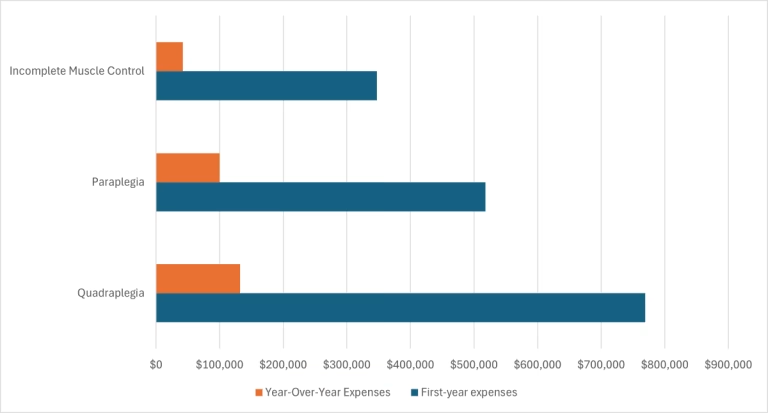
The cost of paralysis claims can be broken down by immediate (first-year) costs and long-term (lifetime) costs.
According to the data published by The Journal of Spinal Cord Medicine and industry experts, the average cost for first-year medical expenses is around $400,000.
First-year expenses tend to reflect hospitalization and heavy testing, which is why they are so high.
Cost-per year medical expenses for each type of paralysis are as follows:
Whether they occur immediately as the result of a traumatic accident or months later, amputations are truly life-threatening complications with life-long impacts. Caring for amputation injuries means doctor’s appointments, therapy, and medical expenses for the rest of your life.
If you have been in a workplace, truck or automobile accident that resulted in the loss of your limbs or other body parts, you need to contact an experienced lawyer immediately. The Law Offices of Hilda Sibrian have served Houston’s clients for over 21 years. Hilda Sibrian serves the Houston metropolitan area, including Sugar Land, Missouri City, La Porte, Beaumont, Pasadena, The Woodlands, The Heights, Bellaire, Kingwood, Baytown and of course Houston proper. Call our office today at 713-714-1414 or fill out our online contact form for a free consultation.

Contact Us